
BISP Stipend Increase 2026
The government has announced a significant step to support low-income families through the BISP Stipend Increase 2026. This decision aims to provide financial relief to households struggling with rising living costs. By increasing stipends under various programs, authorities are focusing on improving the quality of life for vulnerable communities across the country.
This initiative is part of a broader effort to strengthen social protection and ensure that basic needs such as education and healthcare remain accessible. The increase reflects the government’s commitment to reducing poverty and helping families manage their daily expenses more effectively.

- Focus on financial relief for low-income families
- Targeted support for women and children
- Strengthening social welfare programs
- Improving access to essential services
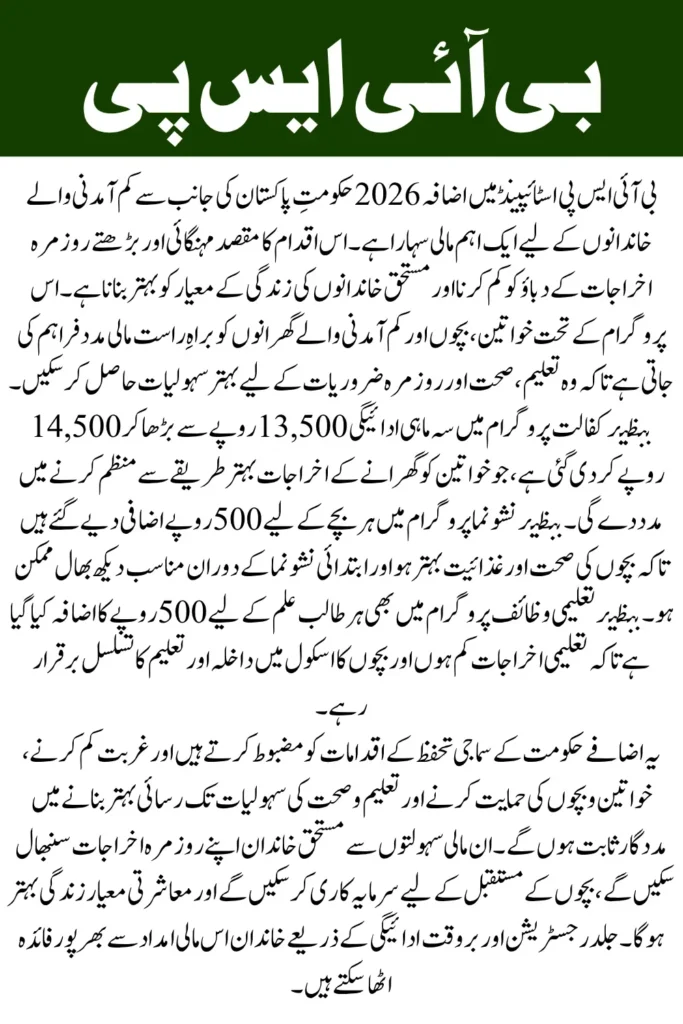
Updated Payments Under Benazir Kafaalat Program
Under the BISP Stipend Increase 2026, the Benazir Kafaalat Program has received a notable boost. The quarterly payment for registered women has been increased from Rs. 13,500 to Rs. 14,500. This rise is expected to help women better manage household expenses and maintain financial stability.
The program plays a key role in empowering women by providing them with direct financial assistance. With this increase, beneficiaries can better cope with inflation and ensure that their families’ basic needs are met without additional financial stress.

| Payment Type | Previous Amount | New Amount | Increase |
|---|---|---|---|
| Quarterly Stipend | Rs. 13,500 | Rs. 14,500 | Rs. 1,000 |
- Increased quarterly financial support
- Direct benefit to registered women
- Helps manage rising household expenses
- Encourages financial independence
Increase in Benazir Nashonuma Program
The Benazir Nashonuma Program has also been updated under the BISP Stipend Increase 2026. Families will now receive an additional Rs. 500 per child, which is aimed at improving child health and nutrition. This increase ensures that children in low-income households receive better care during their early development stages.
By focusing on nutrition and healthcare, the program addresses one of the most critical aspects of poverty. Proper nourishment during childhood leads to better physical and mental growth, ultimately contributing to a healthier society in the long term.

- Additional Rs. 500 per child
- Focus on nutrition and early development
- Supports mothers in child care
- Promotes healthier future generations
Boost in Benazir Taleemi Wazaif Program
Education support has also been strengthened through the BISP Stipend Increase 2026. The Benazir Taleemi Wazaif Program now offers an additional Rs. 500 per student. This increase is designed to encourage school enrollment and reduce dropout rates among children from low-income families.
With rising education costs, many families struggle to keep their children in school. This financial assistance helps cover basic educational expenses, making it easier for parents to prioritize their children’s education and secure a better future for them.
| Program | Previous Support | New Increase | Purpose |
|---|---|---|---|
| Taleemi Wazaif | Existing stipend | + Rs. 500 | Support education |
| Nashonuma | Existing stipend | + Rs. 500 | Improve child health |
- Extra support per student
- Encourages continuous education
- Reduces financial burden on parents
- Helps improve literacy rates
Government’s Objectives and Social Impact
The BISP Stipend Increase 2026 reflects the government’s intention to strengthen social safety nets. By increasing financial aid, authorities aim to reduce economic pressure on vulnerable households and improve their overall living standards. This step is also aligned with long-term poverty reduction strategies.
The impact of these changes is expected to be positive, especially for families who rely heavily on government support. Increased stipends will help them manage daily expenses, invest in their children’s future, and improve their overall well-being.
- Strengthening social protection measures
- Supporting vulnerable communities
- Improving access to healthcare and education
- Reducing poverty and inequality
Conclusion
The BISP Stipend Increase 2026 is a meaningful initiative that provides much-needed financial relief to low-income families. By increasing payments across multiple programs, the government is addressing key issues such as poverty, education, and child health. These changes are expected to create long-term benefits for society and improve the lives of millions.
Overall, this step highlights the importance of continued investment in social welfare programs. With better financial support, families can achieve stability and work towards a more secure future.
- Increased financial assistance across programs
- Better support for women and children
- Positive long-term social impact
- خطوة toward economic stability
FAQs
What is the new stipend amount under the Benazir Kafaalat Program?
The quarterly payment has been increased from Rs. 13,500 to Rs. 14,500. This provides additional financial support to registered women.
How much increase is given in the Nashonuma Program?
An additional Rs. 500 per child has been added. This helps improve child nutrition and healthcare.





What changes have been made to the Taleemi Wazaif Program?
Students will now receive Rs. 500 extra. This encourages education and reduces dropout rates.
Who benefits from the BISP Stipend Increase 2026?
Low-income families, especially women and children, benefit the most. The program targets financially vulnerable households.