CM Punjab Rehmat Card 2026
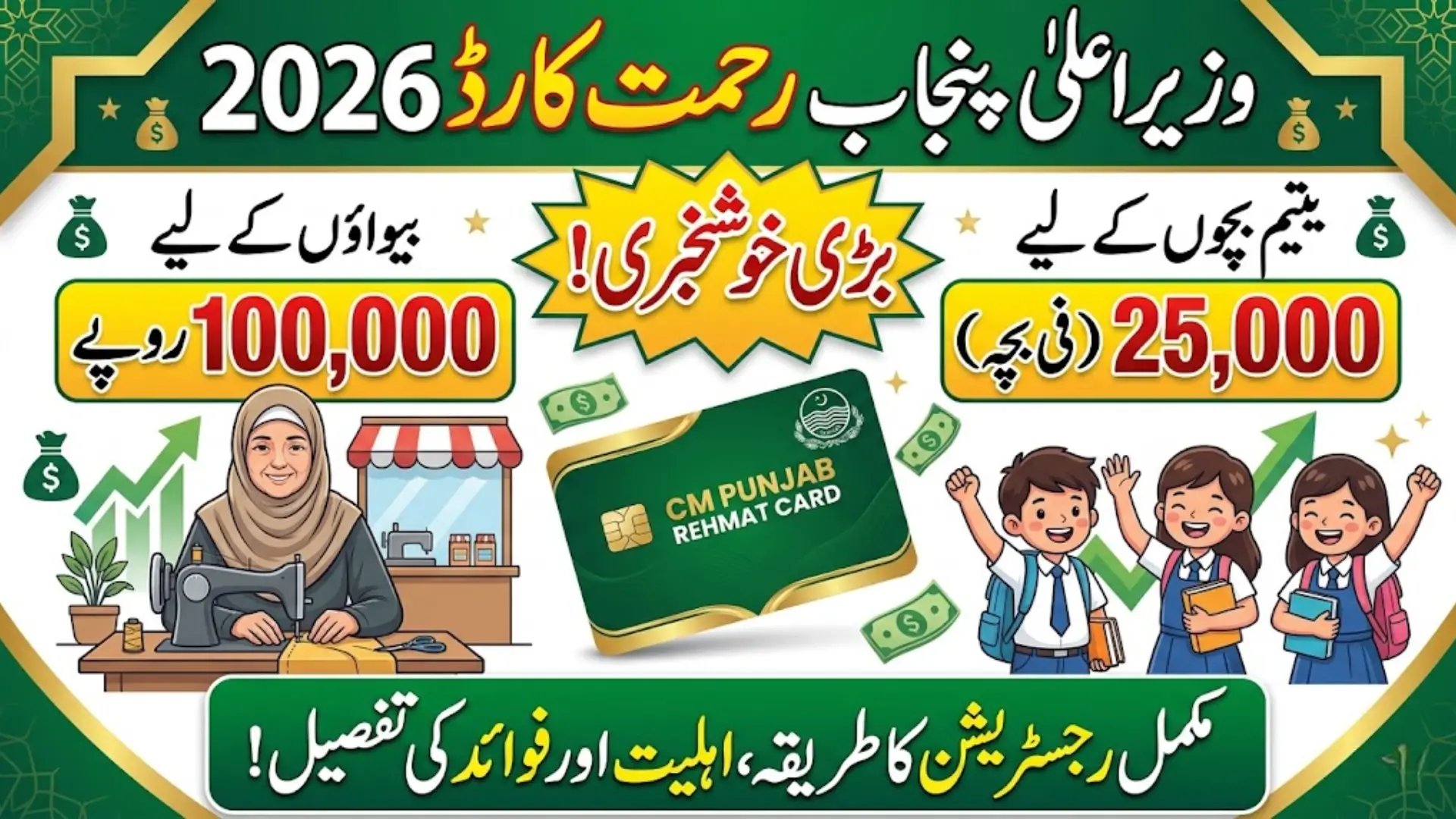
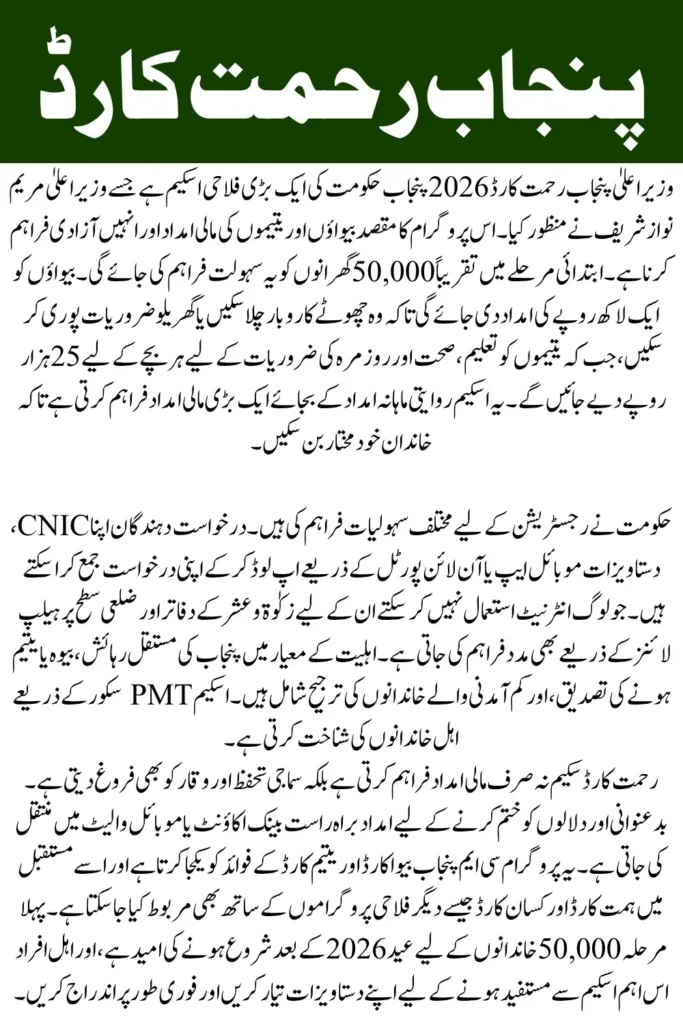
The CM Punjab Rehmat Card 2026 is a flagship welfare initiative approved by Chief Minister Maryam Nawaz Sharif, designed to support widows and orphan children across Punjab. Unlike traditional welfare programs, this scheme proactively identifies vulnerable families and provides financial assistance to help them regain stability. The program emphasizes dignity, independence, and long-term economic empowerment for its beneficiaries.
This initiative marks a significant step in Punjab’s social welfare strategy, aiming to reach 50,000 households in its initial phase. By providing substantial support to widows and orphans, the government seeks to reduce dependency on charity and ensure children can continue their education without financial hurdles.

- Targets widows and orphan children
- Approved by Chief Minister Maryam Nawaz Sharif
- Initial coverage: 50,000 households
- Focus on financial independence and dignity
What is CM Punjab Rehmat Card 2026?
The CM Punjab Rehmat Card 2026 is part of the government’s Sarkari Kafalat (State Patronage) initiative. The scheme creates a digital support system for families who have lost their primary breadwinner. Its name, “Rehmat,” symbolizes the program’s mission to provide a blessing and relief during difficult times.
Unlike small monthly handouts, the Rehmat Card focuses on financial capital that empowers families. Widows can use the funds to start home-based businesses, while orphan children receive support for education, healthcare, and daily needs. The program represents a shift from temporary assistance to meaningful, long-term support.
- Digital welfare system for vulnerable families
- Emphasis on financial empowerment
- Supports education and healthcare for children
- Encourages economic independence
Eligibility Criteria for CM Punjab Rehmat Card 2026
To ensure that assistance reaches the most deserving, strict eligibility criteria have been introduced. Applicants must be permanent residents of Punjab with a valid CNIC. Verification of widow status is required through NADRA records, and orphan children are eligible if they have lost one or both parents. Priority is given to children living with a widowed mother or guardian.
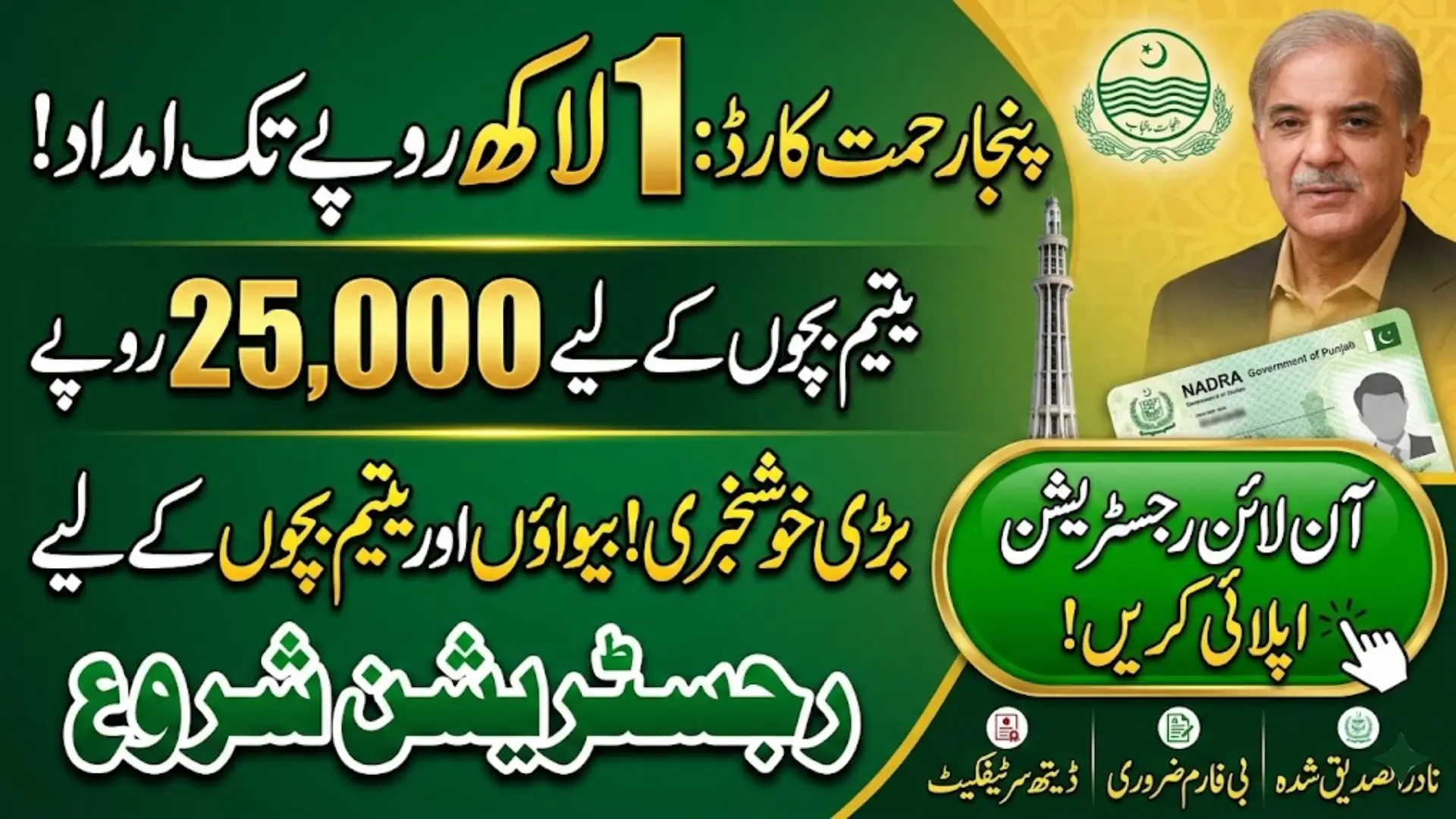
The government also considers the PMT (Poverty Means Test) score to identify low-income families without regular income. Required documents include the widow’s CNIC, NADRA death certificate of the husband or parents, children’s B-Form, and a mobile number linked to the CNIC.
| Eligibility Requirement | Details |
|---|---|
| Residency | Permanent resident of Punjab |
| Widow Status | Registered as widow in NADRA |
| Orphan Children | Lost one or both parents |
| Poverty Assessment | Low PMT score |
| Required Documents | CNIC, death certificate, B-Form, mobile number |
- Permanent Punjab residency required
- Verified widow or orphan status
- Low-income families prioritized
- Submission of essential documents
CM Punjab Rehmat Card Registration Process
The Punjab Government has introduced multiple registration channels to simplify the application process. The fastest method is the Rehmat Card mobile app, which allows applicants to enter CNIC details, upload documents, and track application status.
Applicants can also register through the official web portal, where they can fill forms, upload supporting documents, and check eligibility. For those without internet access, the government helpline and district-level Zakat & Usher offices provide offline assistance, including document verification and submission.
- Mobile app registration with document upload
- Online portal for application and eligibility check
- Helpline support for offline applicants
- Manual registration at district offices
Financial Benefits of Rehmat Card Scheme
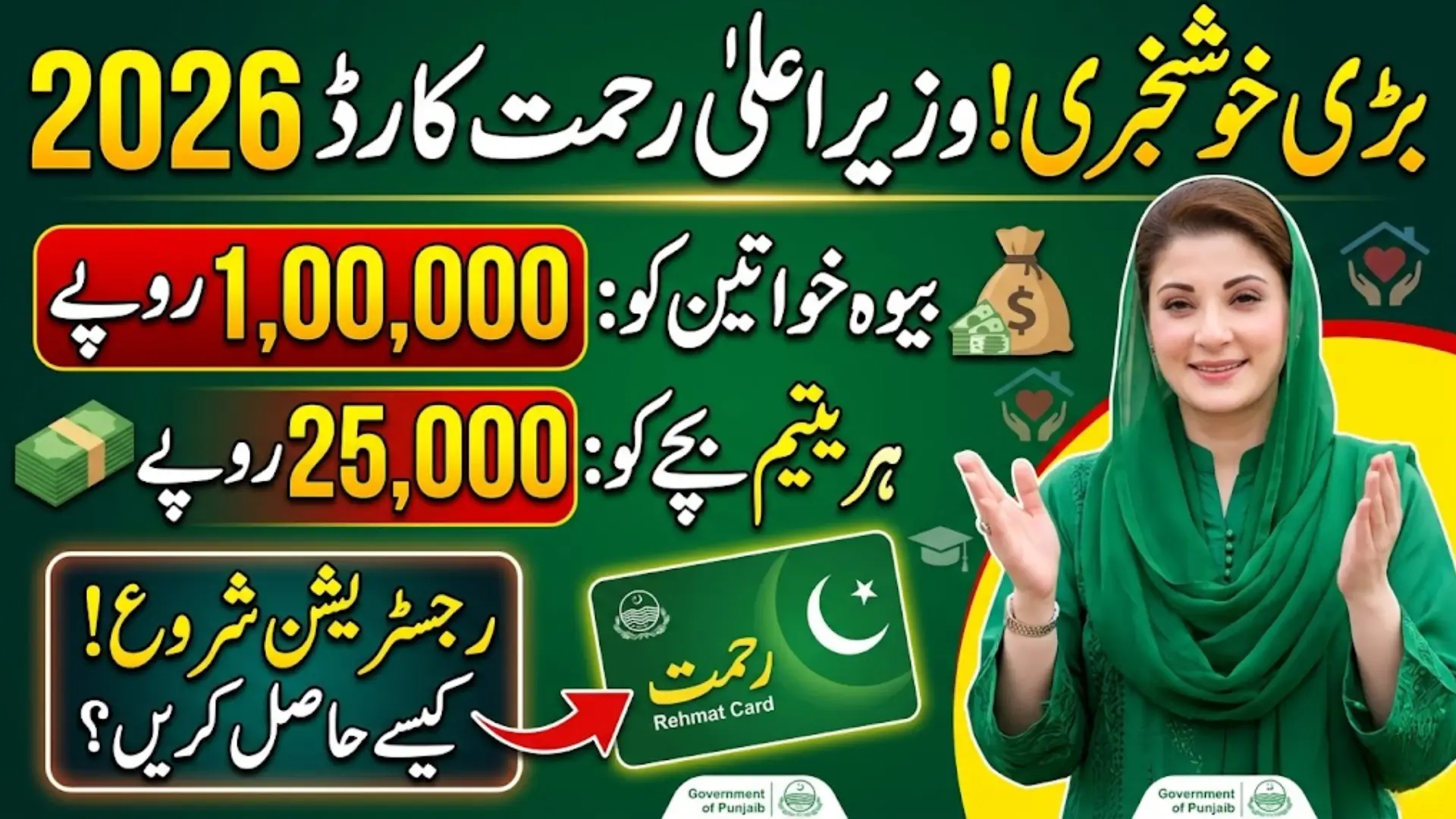
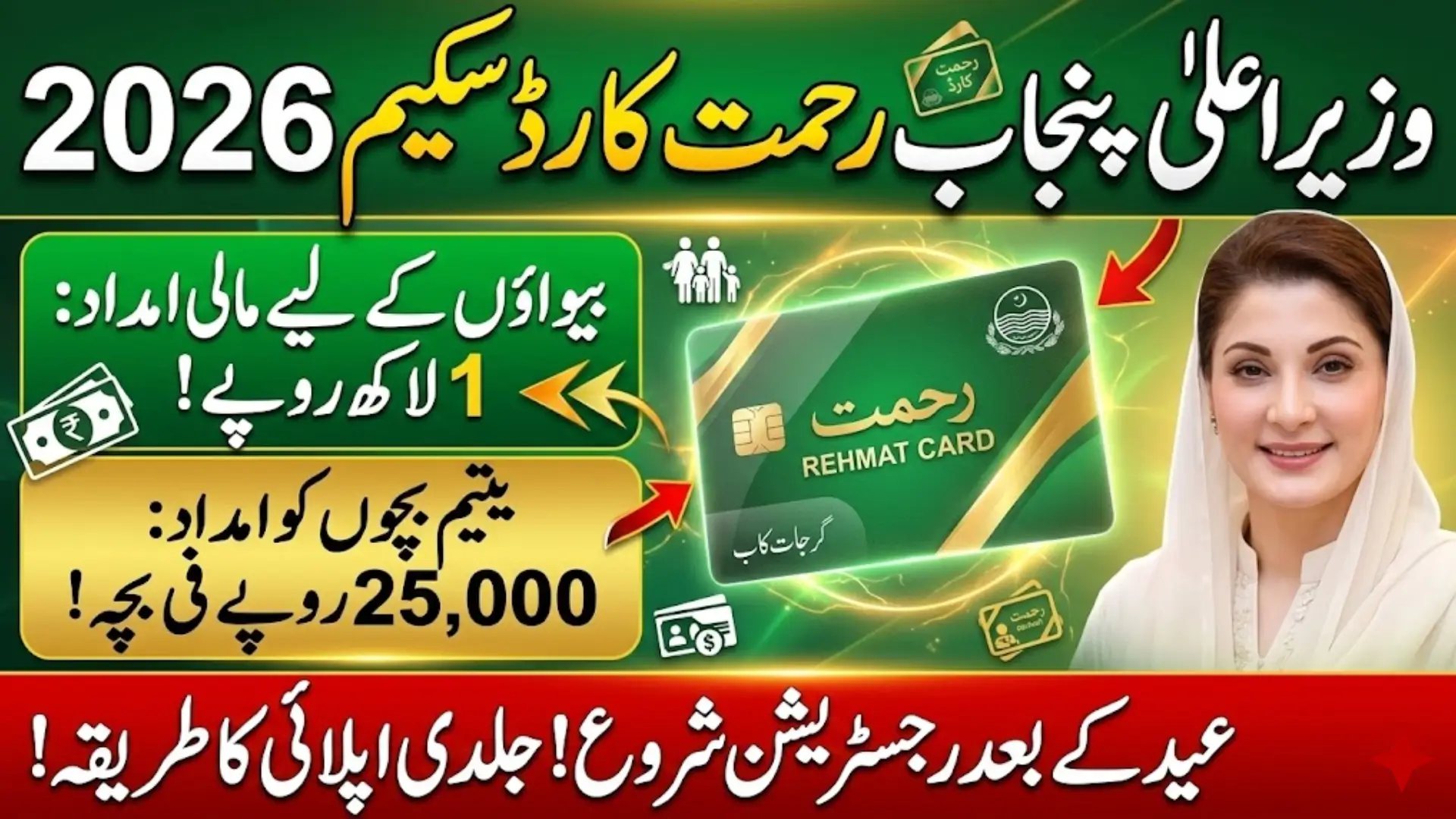
The Rehmat Card provides substantial financial assistance aimed at long-term empowerment. Widows receive Rs. 100,000, which can be used to start small businesses, purchase equipment, or cover major household expenses. Orphan children receive Rs. 25,000 per child to support education, clothing, and health-related needs.
The higher one-time grants differentiate this scheme from traditional small monthly payments. By providing a significant sum upfront, the program enables families to become self-reliant, start home-based businesses, invest in livestock, or fund school expenses for children.
| Beneficiary Category | Financial Assistance | Purpose |
|---|---|---|
| Widows | Rs. 100,000 | Business startup or household expenses |
| Orphan Children | Rs. 25,000 per child | Education, clothing, and healthcare |
- One-time financial grants for widows and children
- Encourages economic independence
- Supports education and business initiatives
- Reduces reliance on charity
Importance and Impact of Rehmat Card Scheme
The Rehmat Card addresses both economic and social challenges faced by widows and orphan children. By providing financial independence, it reduces dependency on relatives or charity and restores dignity to vulnerable families. Orphan children are more likely to remain in school, contributing to long-term societal benefits.
Digital transparency is a key feature, with funds transferred directly to beneficiaries’ bank accounts or mobile wallets. This eliminates corruption and middlemen, ensuring that support reaches the intended recipients efficiently. The scheme also combines the benefits of the CM Punjab Bewa Card and CM Punjab Yateem Card, serving as a master welfare program.
- Promotes financial independence and dignity
- Ensures orphan children continue education
- Digital transfers eliminate corruption
- Combines existing widow and orphan support programs
Integration with Other Welfare Programs
The Rehmat Card is part of a broader network of welfare initiatives in Punjab. It connects with other programs such as BISP, Ehsaas, Ramzan Relief, and Apni Chat Apna Ghar. Future expansions may include the Himmat Card for disabled individuals and the Kissan Card for small farmers, reflecting a comprehensive approach to social protection.
By integrating multiple programs, the government aims to create a unified citizen welfare system. This approach simplifies access, improves transparency, and ensures that support reaches all vulnerable groups in an organized manner.
- Linked with BISP, Ehsaas, and Ramzan Relief programs
- Future plans include Himmat Card and Kissan Card
- Part of a unified citizen welfare system
- Simplifies access to multiple support schemes
Conclusion
The CM Punjab Rehmat Card 2026 is a landmark initiative providing Rs. 100,000 to widows and Rs. 25,000 per orphan child. The program empowers families financially, supports children’s education, and promotes social dignity. The first 50,000 households are expected to receive assistance shortly after Eid 2026. Eligible families should prepare documents and register promptly to benefit from this transformative scheme.
By combining financial grants, digital transparency, and long-term empowerment, the Rehmat Card represents a future where widows and orphan children receive meaningful support and can rebuild their lives with confidence.
FAQs
When will Rehmat Card distribution start?
Distribution is expected to begin shortly after Eid 2026 for the first 50,000 families.
Can widows with multiple children receive additional funds?
Yes. A widow receives Rs. 100,000, plus Rs. 25,000 for each orphan child under her care.
Is the payment monthly or one-time?
Currently, it is a one-time financial grant, but future monthly disbursements may be introduced through the digital system.
What if I don’t have a death certificate?
Applicants must obtain a verified NADRA or Union Council death certificate before applying.
Is the Rehmat Card the same as the Bewa Card?
Yes. The Rehmat Card consolidates benefits of both the CM Punjab Bewa Card and Yateem Card.