NADRA CNIC Blocking Bill 2026
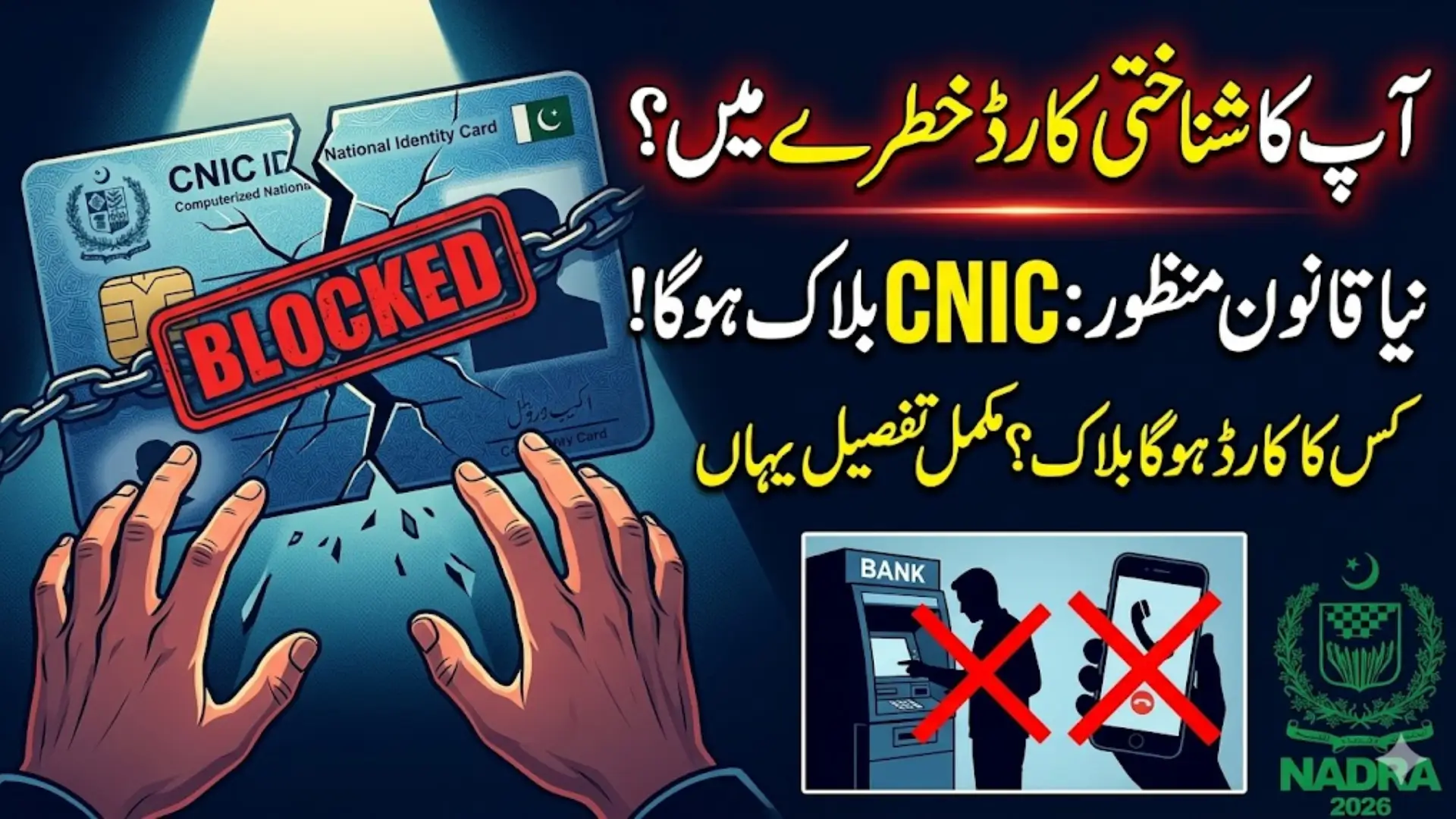
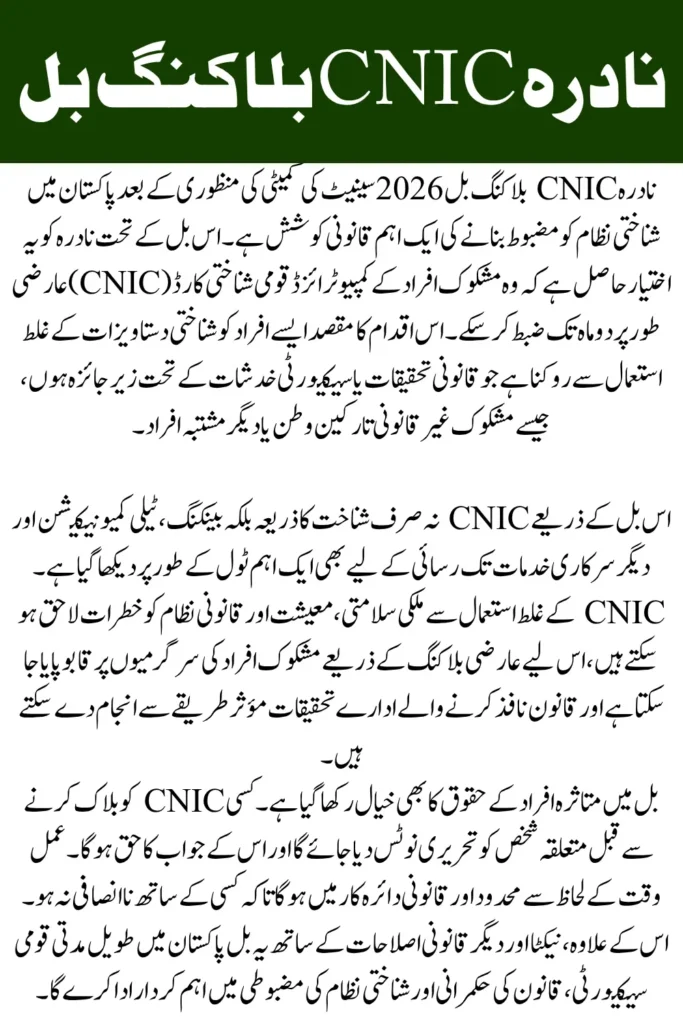
The NADRA CNIC Blocking Bill 2026 has been approved by a Senate committee, marking an important step toward strengthening Pakistan’s identity management system. The amendment allows the National Database and Registration Authority (NADRA) to provisionally impound computerized national identity cards (CNICs) for a limited period. This decision reflects the government’s effort to address emerging security challenges.
Officials explained that the existing legal framework did not clearly allow temporary blocking of CNICs, which created operational hurdles. With the new amendments, NADRA will be able to act more effectively while ensuring that all actions remain within a defined legal process.

- Approved by Senate Standing Committee on Interior
- Applies to CNIC holders under suspicion
- Focus on strengthening legal authority
- Supports national security framework
Key Features of NADRA CNIC Blocking Bill 2026
The NADRA CNIC Blocking Bill 2026 introduces a key provision that allows authorities to impound CNICs for up to two months during verification. This temporary measure ensures that individuals under investigation cannot misuse their identity documents while inquiries are ongoing.
This authority is especially relevant in cases involving suspected illegal immigrants or individuals under scrutiny for legal reasons. The bill provides clarity and legal backing to actions that were previously difficult to enforce due to gaps in the law.

| Feature | Details |
|---|---|
| Impound Duration | Up to 2 months |
| Authority | NADRA |
| Applicable Cases | Suspects, illegal immigrants |
| Legal Status | Provisionally enforced |
- Temporary impoundment allowed
- Maximum duration of two months
- Covers multiple categories of suspects
- Provides legal clarity to authorities
Importance of CNIC as a Security Tool
The NADRA CNIC Blocking Bill 2026 highlights the importance of CNICs as a critical element of national security. Officials informed the committee that CNICs are not just identification documents but also tools that connect individuals to essential services such as banking and telecommunications.
Misuse of CNICs can create serious risks, including threats to internal stability and economic systems. Authorities believe that controlling the use of identity documents is essential for maintaining law and order and protecting the country’s international reputation.

- CNIC links individuals to key services
- Misuse can affect national security
- Impacts economic and legal systems
- Plays a role in global reputation
Faster Action Against Suspects
One of the main goals of the NADRA CNIC Blocking Bill 2026 is to enable faster action against individuals under investigation. Previously, suspects could continue using valid CNICs while avoiding legal proceedings, which made enforcement difficult. The new law addresses this issue by allowing immediate temporary action.
By restricting access to services such as banking and mobile networks, authorities can limit the movement and activities of suspects. This helps law enforcement agencies carry out investigations more efficiently and prevents misuse of legal identity.
| Area Affected | Impact of CNIC Blocking |
|---|---|
| Banking | Restricted access |
| Telecom | Limited usage |
| Government Services | Temporary suspension |
| Legal Proceedings | Improved enforcement |
- Prevents misuse during investigations
- Restricts access to essential services
- Supports law enforcement agencies
- Reduces chances of evasion
Safeguards, Concerns, and Oversight
The NADRA CNIC Blocking Bill 2026 also includes safeguards to ensure fairness and transparency. Authorities have clarified that impoundment will be time-bound and subject to due process. Individuals will receive written notice and will have an opportunity to respond before any final action is taken.
At the same time, committee members raised concerns about misuse and errors. Issues such as Afghan nationals allegedly holding CNICs and Pakistani citizens being wrongly blocked were discussed. Authorities have been directed to review and resolve these concerns to avoid injustice.
- Written notice to affected individuals
- Right to respond to allegations
- Time-bound administrative process
- Review of identification-related issues
NACTA Briefing, Legislative Progress, and Conclusion
During the same session, the committee also received a briefing from the National Counter Terrorism Authority (NACTA). Officials explained that they have shifted to an intelligence-led approach to counter extremism. This includes analyzing content and producing counter-narratives through media and educational initiatives.
In addition, the Pakistan Penal Code (Amendment) Bill, 2026, was also approved. Together, these measures reflect a broader effort to strengthen governance, security, and legal systems. The NADRA CNIC Blocking Bill 2026 is expected to play a key role in improving identity management and national stability.
- Intelligence-led counter-extremism strategy
- Public awareness through media and education
- Approval of additional legal reforms
- Focus on long-term national security
FAQs
What is the NADRA CNIC Blocking Bill 2026?
It is a law allowing NADRA to temporarily block CNICs for up to two months. This helps authorities verify identities during investigations.
Who can have their CNIC impounded under this bill?
Individuals under suspicion, including illegal immigrants, may have their CNICs temporarily blocked. The action is based on verification needs.





Are there safeguards in place for affected individuals?
Yes, individuals will receive written notice and can respond to the action. The process is time-bound and follows legal procedures.
Why is CNIC blocking important for national security?
It prevents misuse of identity documents in banking, telecom, and other sectors. This helps maintain law and order and supports investigations.