
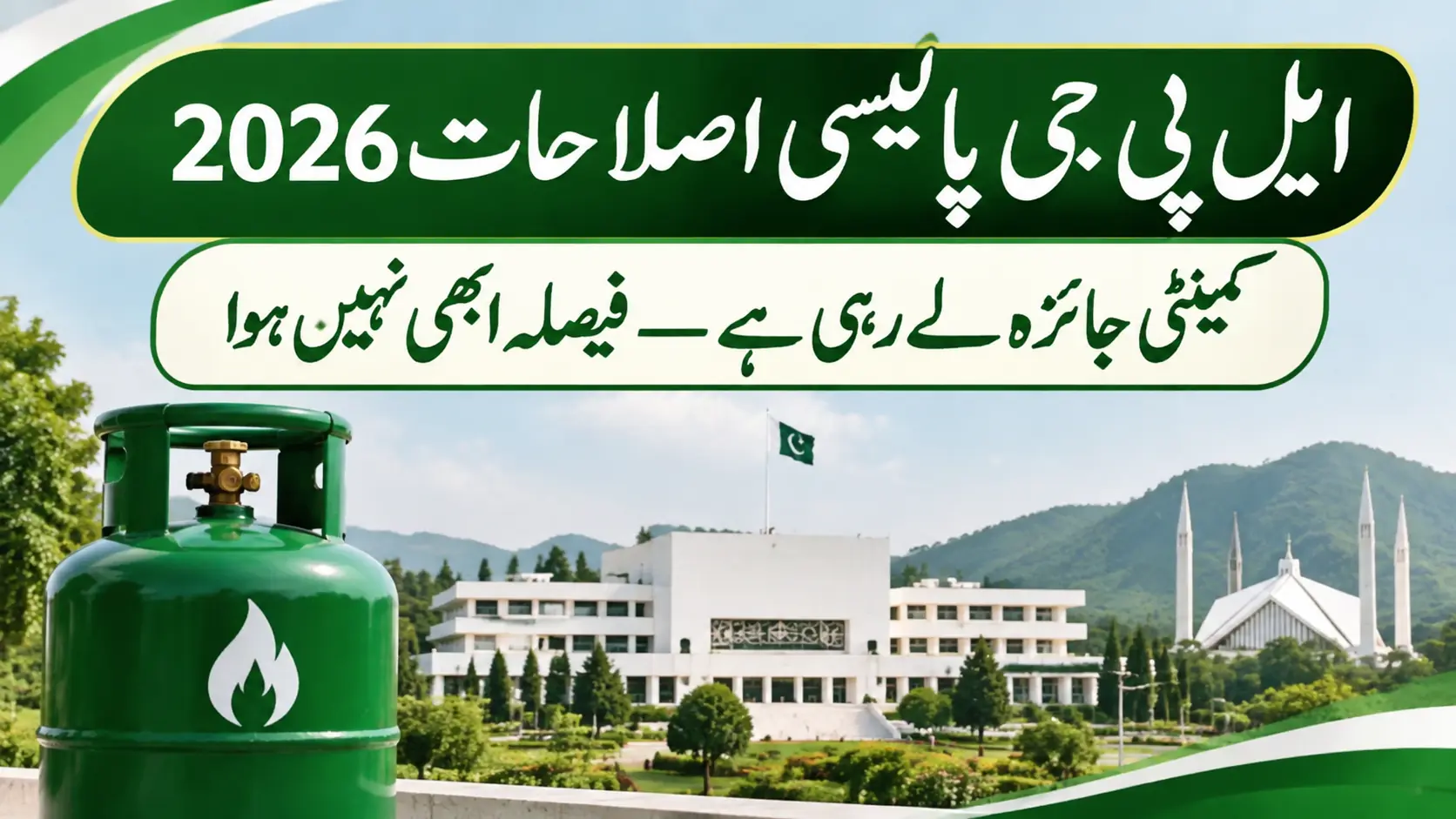
Pakistan’s proposed LPG policy reforms are under review after Prime Minister Shehbaz Sharif reportedly formed an eight-member ministerial committee on October 31, 2026. The committee will examine the proposed changes to LPG imports, pricing, cylinder standards and the local LPG market before submitting its report to the Prime Minister.
The proposed reforms could change how LPG prices are determined in Pakistan. One major suggestion is to involve state-owned companies in LPG imports and move price-setting responsibilities away from OGRA. The proposal also includes a targeted subsidy mechanism through the BISP scorecard.
However, these changes are not approved or implemented policy. The committee has one month to review the proposals, and OGRA continues to issue monthly LPG price notifications.
Meanwhile, the November 2026 official LPG price is Rs294.07 per kg, or Rs3,470.09 for an 11.8kg domestic cylinder, effective November 1, 2026.
LPG Policy Reforms Pakistan 2026 Quick Summary
| Detail | Latest Information |
|---|---|
| Latest development | Committee formed to review proposed LPG reforms |
| Committee members | Eight |
| Committee chairperson | Federal Petroleum Minister |
| Review period | One month |
| Current LPG price | Rs294.07 per kg |
| Domestic cylinder price | Rs3,470.09 per 11.8kg |
| Effective date | November 1, 2026 |
| Proposed pricing change | OGRA to SOE-led pricing mechanism |
| Proposed subsidy | Targeted subsidy through BISP scorecard |
| Policy status | Under review, not final |
The committee’s formation and proposed changes were reported by Dawn on October 31, 2026. The November LPG prices are based on OGRA’s latest notification.
Why Has the Government Formed an LPG Policy Review Committee?
The Petroleum Division has proposed changes to Pakistan’s existing LPG framework. These proposals focus on improving local LPG allocation, involving state-owned companies in imports and changing the way monthly prices are determined.
However, the proposed changes have raised concerns among LPG marketing companies, dealers and other industry participants.
Some stakeholders have questioned the proposed pricing benchmark and the government’s plan to give state-owned companies a greater role in the LPG market.
According to Dawn’s October 31 report, Prime Minister Shehbaz Sharif constituted an eight-member ministerial committee to examine these proposals before further decisions are made.
What Will the Eight-Member Committee Review?
According to Dawn, the committee will be chaired by the federal petroleum minister and will include the following members:
- Minister for Economic Affairs
- Minister for Information
- Prime Minister’s Adviser on Interprovincial Coordination
- Special Assistant on Energy
- Petroleum Secretary
- Director General of Liquefied Gases
- Head of the Government Relations Unit (GRU)
The committee has one month to review the proposed reforms and examine three main areas:
- Proposed changes to the LPG policy.
- LPG cylinder standards.
- The local LPG production and allocation model.
After completing its review, the committee is expected to submit a comprehensive report to the Prime Minister.
Important: The committee is reviewing proposals. Its formation does not mean that the government has approved the new LPG pricing system or other suggested changes.
What Could Change for LPG Consumers Under the Proposed Policy?
The proposed reforms could change the way LPG is imported, priced and distributed in Pakistan. However, consumers should understand that these are suggested changes rather than rules currently in force.
OGRA Pricing Could Move to State-Owned Companies
One major proposal is to involve state-owned enterprises in LPG imports and monthly price-setting. The companies mentioned in Dawn’s report include:
- Pakistan State Oil (PSO)
- Sui companies
- PARCO (Pak-Arab Refinery Company)
- Pakistan LNG
The proposed framework would give these state-owned companies a greater role in purchasing imported LPG and determining the monthly pricing benchmark. It also recommends that OGRA stop issuing price notifications for locally produced and imported LPG.
However, OGRA has not stopped issuing LPG price notifications. The regulator issued its November 2026 price notification, effective November 1. Therefore, consumers should continue checking OGRA’s notified prices rather than assuming that the proposed pricing system has already started.
How Would Import-Parity Pricing Work?
The proposed policy suggests using an import-parity pricing mechanism based on international LPG prices and related import expenses. According to Dawn’s reporting on the cabinet summary, the proposed calculation would consider: Saudi Aramco’s international FOB benchmark prices; import premiums; freight expenses; insurance costs; other incidental import expenses; relevant import taxes; adjustments for the propane-butane ratio. The proposal also retains monthly LPG pricing.
Under this suggested arrangement, prices would be calculated using the relevant international benchmark and import-related costs. However, this formula has not been confirmed as the new official pricing mechanism.
Would LPG Prices Automatically Decrease?
No guaranteed reduction in LPG prices has been announced. Although the proposed reforms aim to change the import and pricing arrangements, their actual impact on consumers is not yet known. The committee must first review the proposals, and the government has not confirmed a new consumer LPG price under the proposed system. Consumers should therefore rely on the existing OGRA notification until an official change is announced.
Why Are LPG Market Prices Much Higher Than OGRA Rates?
There is a significant difference between the officially notified LPG price and the market prices reported by Dawn. Consumers should understand that OGRA’s notified rate and the reported open-market selling price are two different figures.
November 2026 Official OGRA LPG Price
OGRA’s November 2026 notification sets the LPG price at Rs294.07 per kg. The applicable domestic cylinder price is Rs3,470.09 for an 11.8kg cylinder, effective November 1, 2026.
| Price Detail | November 2026 |
|---|---|
| LPG price per kg | Rs294.07 |
| Domestic cylinder weight | 11.8kg |
| Price per cylinder | Rs3,470.09 |
| Effective date | November 1, 2026 |
This is the current notified price for November 2026.
What Was the October 2026 LPG Price?
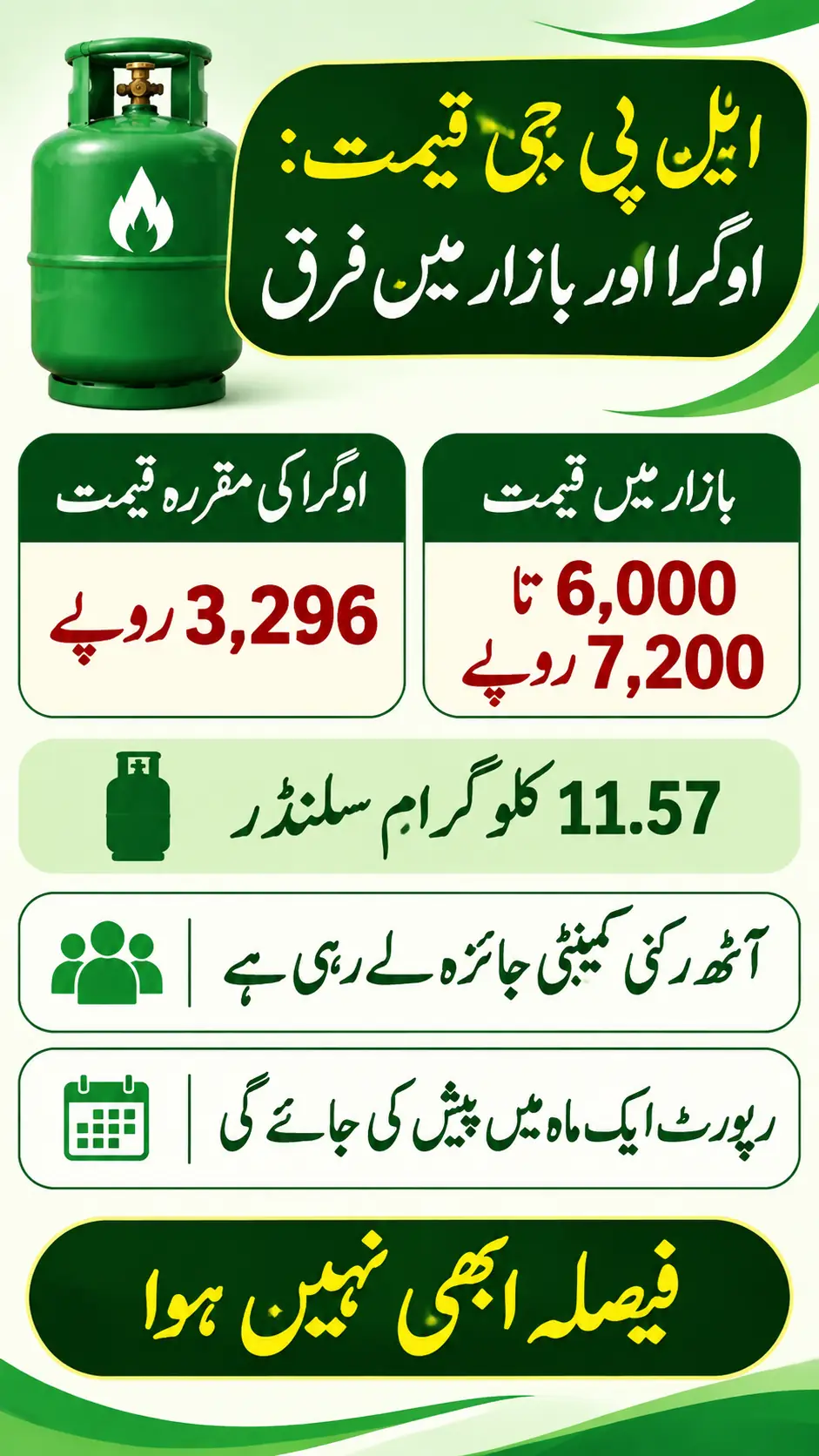
Before the November increase, OGRA’s notified LPG price was Rs279.34 per kg. The price for an 11.8kg domestic cylinder was Rs3,296.23.
| Price Detail | October 2026 |
|---|---|
| LPG price per kg | Rs279.34 |
| Domestic cylinder weight | 11.8kg |
| Price per cylinder | Rs3,296.23 |
The November price increased by Rs14.73 per kg compared with October.
What Were LPG Dealers Charging in the Open Market?
In its October 31, 2026 report, Dawn reported that LPG was selling for approximately Rs6,000 to Rs7,200 per 11.57kg cylinder in the market. The report compared these market prices with OGRA’s October notified cylinder price of approximately Rs3,296.
| Price Category | Reported Amount |
|---|---|
| Open-market cylinder price | Rs6,000–7,200 |
| Market cylinder weight | 11.57kg |
| Dawn report date | October 31, 2026 |
| October OGRA notified price | Rs3,296.23 |
| Official cylinder weight | 11.8kg |
There is an important difference in cylinder sizes. Dawn’s market comparison used an 11.57kg cylinder, while the official October price applied to an 11.8kg cylinder. These figures show the reported difference between notified and market prices, but they are not an exact comparison of identical cylinder weights. The reported market prices should also not be treated as a uniform rate across Pakistan.
Proposed BISP LPG Subsidy: What Is the Government Planning?
Another important part of the proposed LPG reforms is a targeted subsidy mechanism for vulnerable consumers. According to Dawn’s October 31 report, the cabinet summary proposes creating a Producer-Price Differential Fund. The suggested mechanism would connect the price difference between locally produced LPG and the import-based benchmark with targeted assistance through the BISP scorecard. However, this remains a proposal under review.
How Would the Proposed Subsidy Fund Work?
The reported proposal describes the following arrangement: local LPG producers would receive a producer price linked to Saudi Aramco’s Contract Price; the difference between the relevant local producer price and PSO’s import-based benchmark would be deposited into a dedicated fund; refineries and other producers would contribute the price difference; the fund would be maintained in a dedicated Public Account; the Auditor General would audit the fund; the government would use the money for targeted subsidies through the BISP scorecard. The objective of this proposed arrangement is to provide targeted assistance to vulnerable LPG consumers. However, the government has not confirmed that the fund has been established or that payments have started.
Has BISP Started LPG Subsidy Registration?
No. There is currently no confirmed registration process for the proposed LPG subsidy. The reported proposal mentions the BISP scorecard as a possible method for identifying vulnerable consumers. However, the following details have not been officially announced: LPG subsidy registration process; eligibility criteria; payment amount; application deadline; first payment date. Consumers should not trust websites or social media posts claiming that they can register for this proposed LPG subsidy through an unverified form or SMS code.
For information about the existing BISP payment system, you can Check your BISP 8171 payment status online. Remember that the existing BISP payment system is separate from the proposed LPG subsidy mechanism.
What Is Not Decided Yet About Pakistan’s LPG Policy?
The most important point is that Pakistan’s proposed LPG policy reforms have not yet been confirmed as final government decisions. The eight-member committee is reviewing the proposals and has one month to submit its report. The following changes should not be treated as implemented:
| Proposed Change | Current Position |
|---|---|
| State-owned companies taking over LPG pricing | Proposed |
| OGRA stopping monthly price notifications | Proposed |
| Minimum Rs50,000 marketing and importing margin per tonne | Proposed |
| 10%/90% local LPG allocation model | Proposed |
| Producer-Price Differential Fund | Proposed |
| BISP-linked LPG subsidy | Proposed |
| BISP LPG registration | Not announced |
| Subsidy eligibility criteria | Not announced |
| Subsidy payment amount | Not announced |
| Final committee report | Not available |
| Complete policy implementation | Not confirmed |
The government must review the proposals before consumers can know which changes, if any, will become part of the final LPG framework. Until then, OGRA’s existing monthly price notifications remain relevant for consumers.
What Should LPG Consumers Do Meanwhile?
While the government reviews the proposed reforms, consumers should continue following existing LPG safety guidance.
Buy LPG From Licensed Dealers
The Petroleum Division advised consumers to purchase LPG only from licensed distributors. This advice was included in the government’s response to a National Assembly question dated February 12, 2026. Consumers should also avoid uncertified cylinders and unauthorized cylinder refilling. OGRA conducts inspections of LPG storage facilities, filling plants and marketing operations. Regulatory action can be taken against facilities that do not comply with applicable safety requirements.
Check the Latest OGRA LPG Price
Consumers should check the latest notified rate before purchasing LPG. For November 2026, the official notified price is: Rs294.07 per kg; Rs3,470.09 per 11.8kg domestic cylinder; effective November 1, 2026. Remember that the proposed LPG policy reforms have not replaced OGRA’s existing notification system.
Keep Your LPG Purchase Receipt
Keeping a receipt is also a sensible precaution when purchasing LPG. It can help you remember the amount paid and identify the seller if you need to discuss a price or supply issue later. However, retaining a receipt is practical advice, not a newly announced legal requirement under the proposed LPG reforms.
Frequently Asked Questions About LPG Policy Reforms Pakistan 2026
- Has Pakistan approved the new LPG policy in 2026? No final approval of the complete proposed reform package has been confirmed. Prime Minister Shehbaz Sharif reportedly formed an eight-member committee on October 31, 2026, to review the proposals.
- What is the current OGRA LPG price in Pakistan in November 2026? The November 2026 notified LPG price is Rs294.07 per kg. An 11.8kg domestic cylinder costs Rs3,470.09 under the notified rate, effective November 1, 2026.
- Will PSO and other state-owned companies control LPG prices? The proposed reforms suggest involving PSO, Sui companies, PARCO and Pakistan LNG in LPG imports and monthly price-setting. However, this arrangement has not been confirmed as an implemented change.
- Will OGRA stop issuing LPG price notifications? The proposed reforms recommend that OGRA stop issuing LPG price notifications. However, OGRA issued its November 2026 notification, so the proposed change has not taken effect.
- Is BISP offering an LPG subsidy in November 2026? A targeted LPG subsidy through the BISP scorecard is included in the reported proposal. However, no active LPG subsidy programme has been confirmed.
- Can consumers apply for the proposed BISP LPG subsidy? No official application or registration process has been announced. Eligibility criteria, payment amounts and application dates have also not been confirmed.
- When will the LPG policy committee submit its report? According to Dawn’s October 31 report, the eight-member committee has one month to review the proposed reforms and submit a comprehensive report to the Prime Minister.
- Why is market LPG more expensive than the OGRA notified rate? Dawn reported market prices of Rs6,000–7,200 for an 11.57kg cylinder on October 31, 2026. This was compared with October’s notified price of approximately Rs3,296 for an 11.8kg cylinder. The figures relate to different cylinder weights and should not be treated as an identical-size comparison.
Conclusion
Pakistan’s LPG policy reforms are currently under review, and the government has not confirmed their implementation. The eight-member committee formed on October 31, 2026, will examine the proposed changes to LPG imports, monthly pricing, cylinder standards and local distribution arrangements before reporting to the Prime Minister. The proposed transfer of pricing responsibilities to state-owned companies and the BISP-linked subsidy fund should not be treated as active government programmes. For now, the November OGRA notified LPG price remains Rs294.07 per kg or Rs3,470.09 per 11.8kg domestic cylinder. Consumers should continue checking official OGRA notifications and purchasing LPG from licensed distributors while waiting for confirmed government decisions.
Sources
- Dawn — October 31, 2026: PM Shehbaz forms body to review proposed LPG policy reforms (https://www.dawn.com/news/2041093/pm-shehbaz-forms-body-to-review-proposed-lpg-policy-reforms)
- OGRA: Official LPG Notified Prices
- Government of Pakistan, Press Information Department — October 16, 2026: Petroleum Division clarification on transparent LPG allocation
- National Assembly of Pakistan — February 12, 2026: Official National Assembly website and Petroleum Division record
- Pakistan Schemes: How to Check BISP 8171 Payment Online by CNIC — Complete Guide (https://pakistanschemes.pk/bisp-8171-payment-check-online-cnic/)


1 thought on “LPG Policy Reforms Pakistan 2026: What the New Committee Will Review”